AI Engineer World's Fair 2026: Days 1 and 2
Denver is a city that goes to sleep at 10pm on weeknights. Some weekend evenings, it might be up till 1 or 2am with the bars and clubs letting people out, concerts ending, the Nuggets or Avs fans grabbing a pint after extra time in the game, maybe a bacon wrapped sausage scarfed down as you're heading back to your home. But on a Sunday night? Maybe a few service industry folks, and that's it. San Francisco? It's much more awake. Bike couriers with boomboxes playing techno with shiny bright LEDs flashing, drunk girls spilling drinks over the floor of my hotel, tech bros bouncing around outside, it was still pretty lively when I got to my hotel.
Here's how it was supposed to go: leave Denver at 7:00 PM, land in San Francisco a couple hours later, grab a Lyft, maybe pick up my badge early, be at the hotel well before midnight.
Here's how it actually went:
9:20 PM: Delay one. Crew change. You couldn't have planned this earlier?
10:20 PM: Delay two, finally wheels up. Some new FAA rule about parallel landings holding short domestic flights on the ground at SFO. Or maybe Trump just hates California.
1:30 AM: Wheels down. 15 minutes on the tarmac because apparently no one told the ground crew we were coming. Then I had to wait 30 minutes for a Lyft to get to my hotel.
2:00 AM: Yes, 2am.
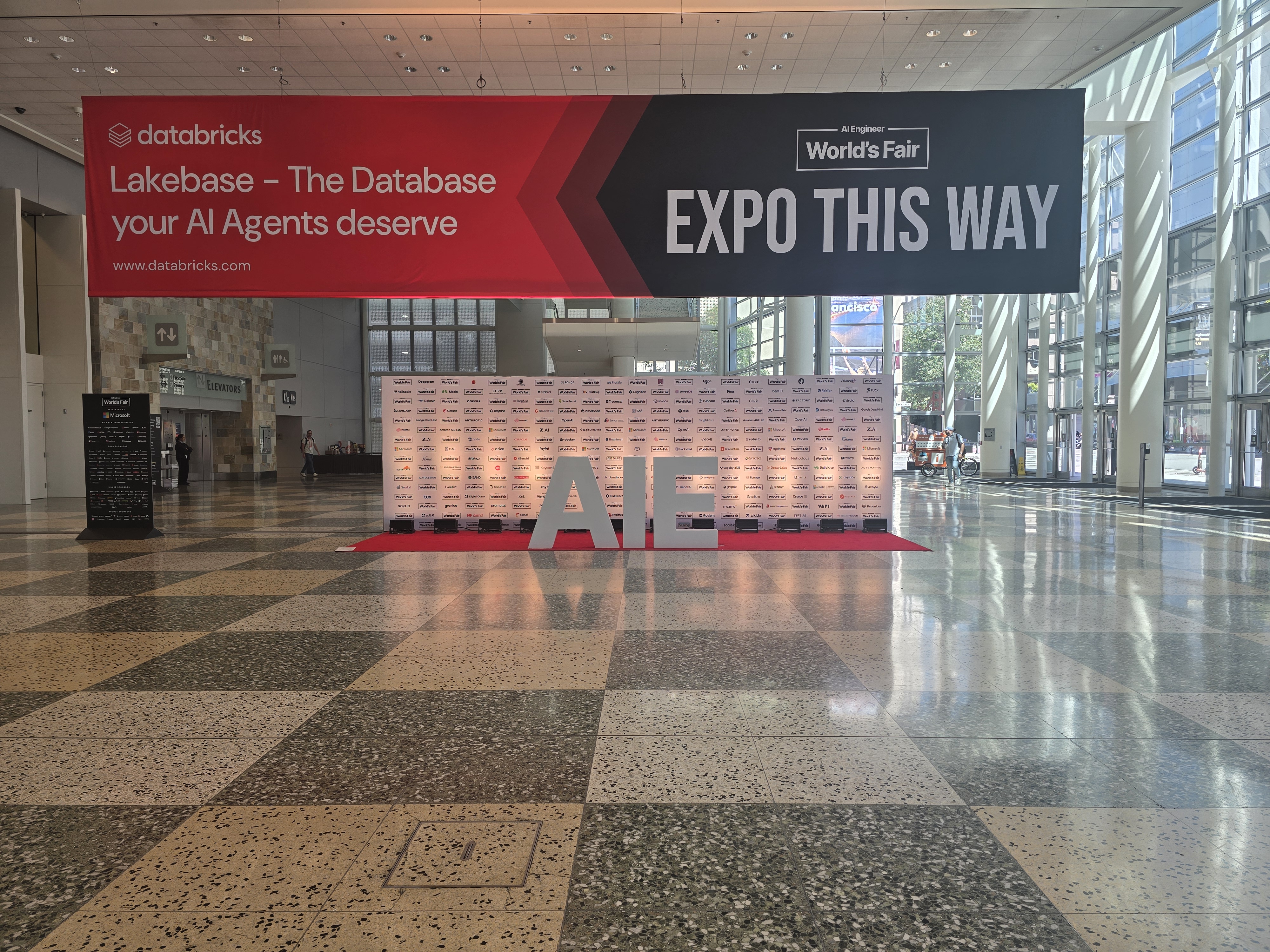
This event was being held in the heart of downtown San Francisco at Moscone West. Fortunately, my driver knew I was exhausted, so he blazed down the 101 at speeds well over 100mph. With every single billboard touting a new solution, or infrastructure perfectly suited for your Agent, I was ready to dive into this new dotcom bubble all of us in tech are experiencing. Check-in took a while, the woman at the desk kept asking the same questions over and over. "Are you jd303? Do you need one or two cards? Thank you! Are you jd303? Do you only need one card? Thank you?" It's 2am, I get it, I cut her some slack.
3:00 AM: Lights out. Unpacked, charged gear, hung up clothes (Perry Ellis, Kenneth Cole, I needed to be superstylin' for the tech bros).
6:30 AM: Woken up. The rowdy neighbors decided I didn't need that sleep after all.
7:00 AM: Back to sleep. For real this time, until 7:45.


Day 1 was workshop day, and the two workshops were a study in opposing philosophies.
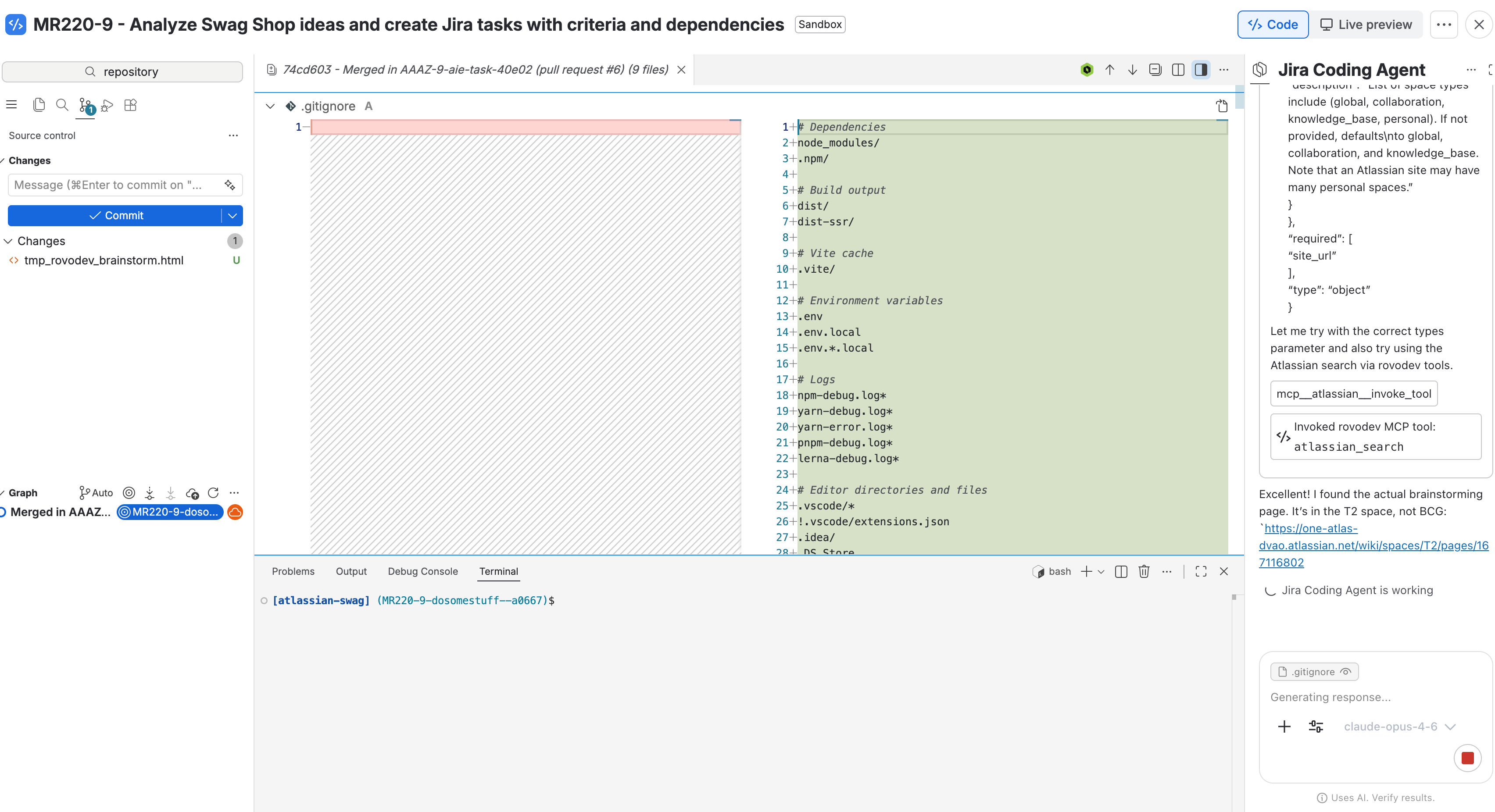
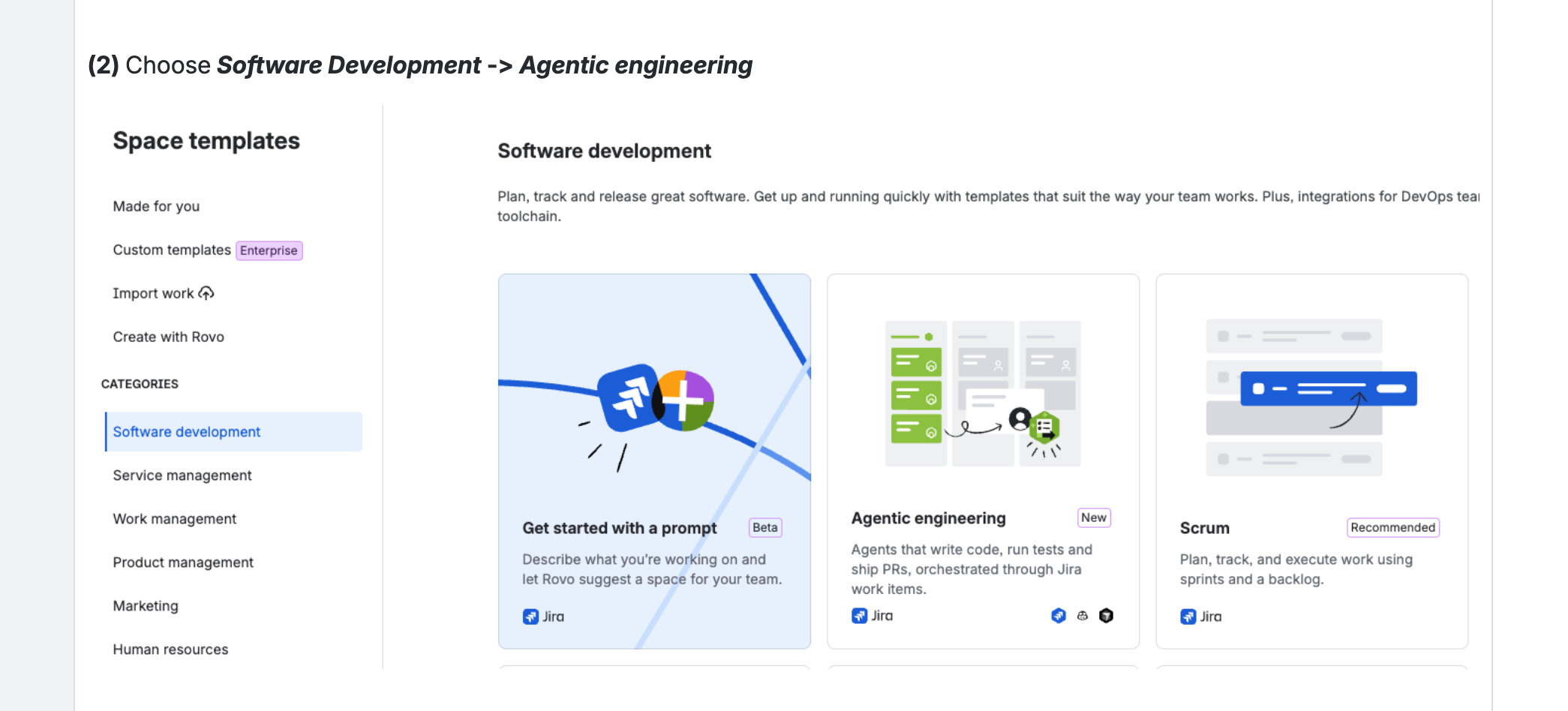
9:00 AM: "The best SDLC is the one you build yourself" (Atlassian). The premise: stop adopting someone else's AI development pipeline and orchestrate your own from agents that already know your organization. The product is Rovo Dev, Atlassian's engineering-focused agent: code planning off a Jira issue, PR review against acceptance criteria, a CLI, and surfaces inside Bitbucket, GitHub, VS Code, and Jira itself. The interesting part is where its knowledge comes from. Rovo Dev pulls existing code standards and architecture docs straight out of Confluence and Jira, no per-repo configuration, which is a direct shot at tools like CodeRabbit that have to be taught your standards repo by repo. If your standards already live in Atlassian products, the context problem is already solved.
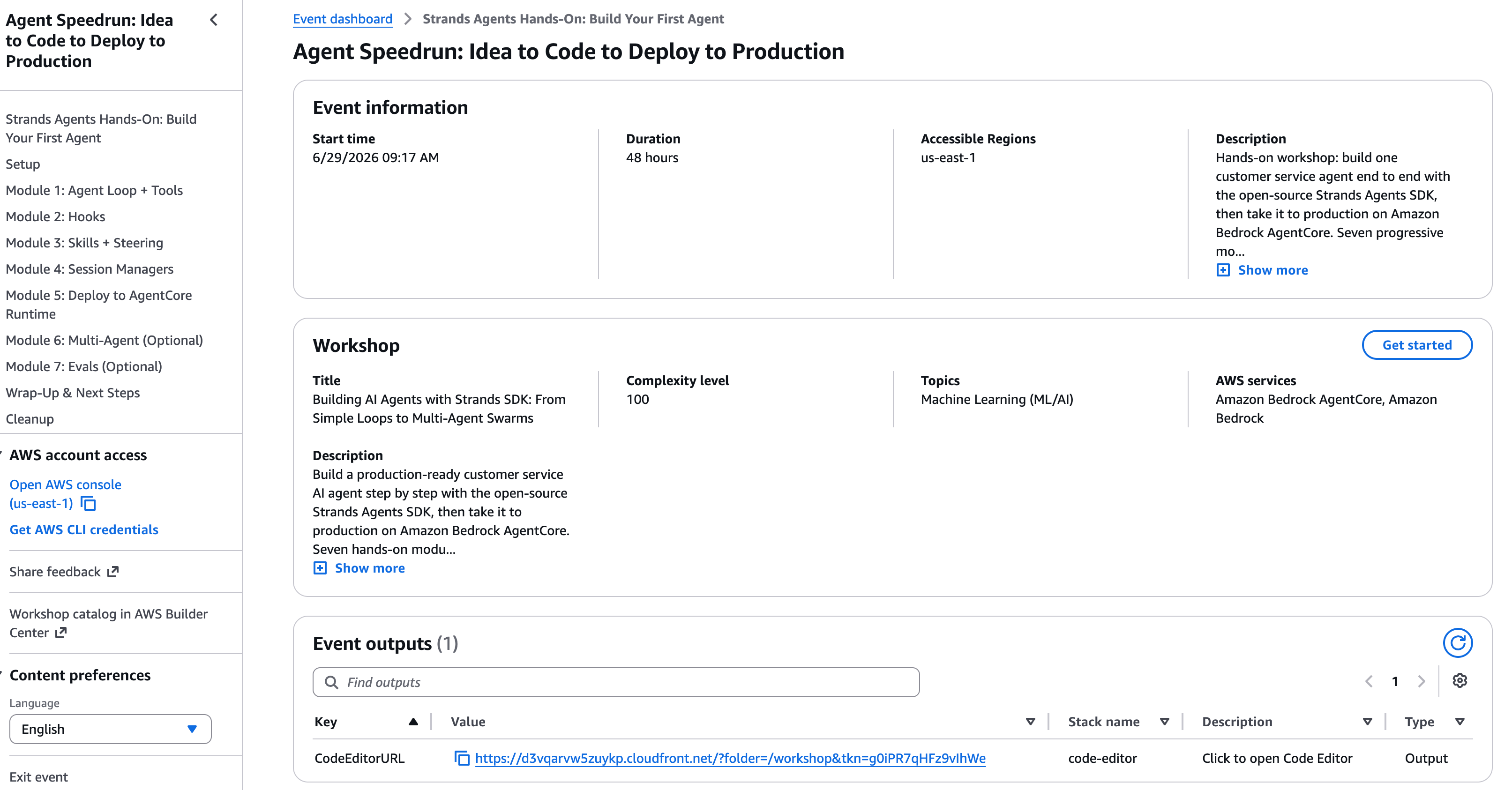
11:05 AM: "Agent Speedrun: Idea → Claude → Deploy → Observe, Fix → Ship" (AWS). The opposite approach: here is the actual code, go build. The workshop repo (sample-strands-agents-hands-on-workshop) walks through building an agent on Strands, deploying it, then instrumenting and fixing it. You leave with something running that you own. Keep this contrast in mind for Day 2, because Anthropic's workshop takes the wizard path instead. Full deep dive on Strands coming in its own post.
12:00 PM: Oink and Oscar.
1:00 PM: Expo browsing.
2:20 PM: "From Vibes to Production: Evaluating and Shipping AI Agents That Work 201" (Arize). The short version: agents that demo well and agents that survive production are separated by evals, and evals run on traces. This session set up a thread that ran through the entire conference.
I got a lot out of the AWS workshop, mostly because I've never actually built my own agent from scratch. Yikes, I know... but I also get the Atlassian pitch completely.
Here's the thing. I would never use an agent cloud provider, and there were tons of them at this conference. It's Heroku all over again. I guess it's fine for a demo or an MVP, but if you're a real company, you run that on your own infrastructure, and if you're in a regulated space like my current employer, cloud provider agents are off the table anyway. GDPR, data sovereignty, pick your compliance poison.
Atlassian's a little different though. Yeah, it's technically vendor lock in, but so is the AWS approach, though at least you can pull the code out and run it elsewhere. But Atlassian is already the de facto standard for tickets. What's the alternative, Bugzilla? Remedy? ServiceNow? Get real, you know the others are even more terrible than Jira's last UI update. Not only that, you're already locked in to Atlassian, all your documentation and code standards are already sitting in Confluence. The shot at CodeRabbit stands. Does it work across the whole org, or do you have to train it repo by repo? That was my exact problem with Lacework for security. If you've got specific rules you have to follow, you don't want to have to tease or train that into the model every time. Vendor lock in happens either way. You might as well pick the one that's already load bearing in your org.
The guy next to me opened a Jira ticket with the instructions to "build a Tetris clone in react", deploy it with a Cloudflare tunnel. He clicked on the agent, and it did it. Well, there was some "add your Jira instance URL" step first, and I think there's probably a repo set up somewhere that we skipped through, but still. The workflow became "Open a Jira ticket with what you want and get an agent to do it". That's very meaningful, and Junior devs are going to have to compete with these Agents. Or will they? Do they just become feature driven PMs?
Arize's Vibes to Production talk didn't stick with me in the details, but the thread it set up did: Evals on traces, making sure the model's output is actually right. It was kind of boring in the room, but it ran through the entire conference. Evals are the thing everyone is trying to figure out right now. My mom called me on Thursday and even she had questions about it.
Some time around noon I had lunch at Oink and Oscar, because the venue's food selection was atrocious. $22 for a 3 Little Pigs is expensive, but it was a very large sandwich, and this is San Francisco, so it ended up being about the same price as the terrible venue food anyway. K-Dawg (who I ran into on the Expo floor) around 4:30pm was paying $90/day for parking. Ouch. San Francisco is just expensive.
1:00 PM: Expo browsing.
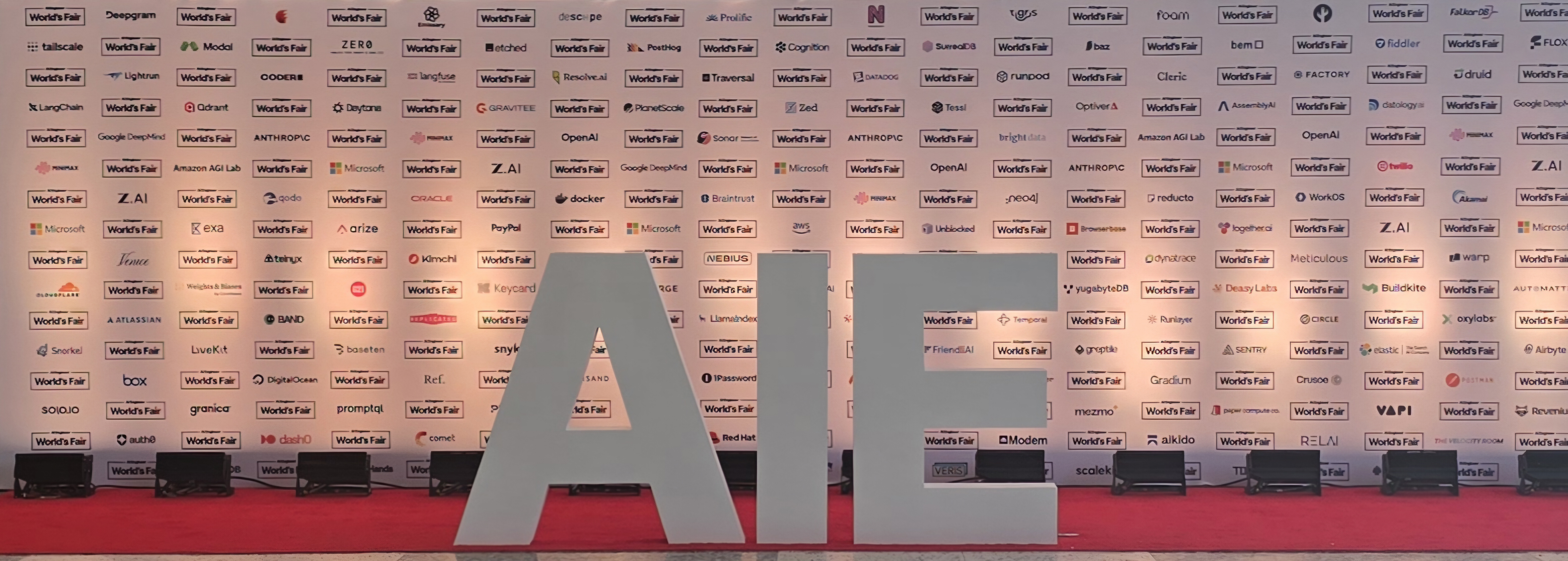
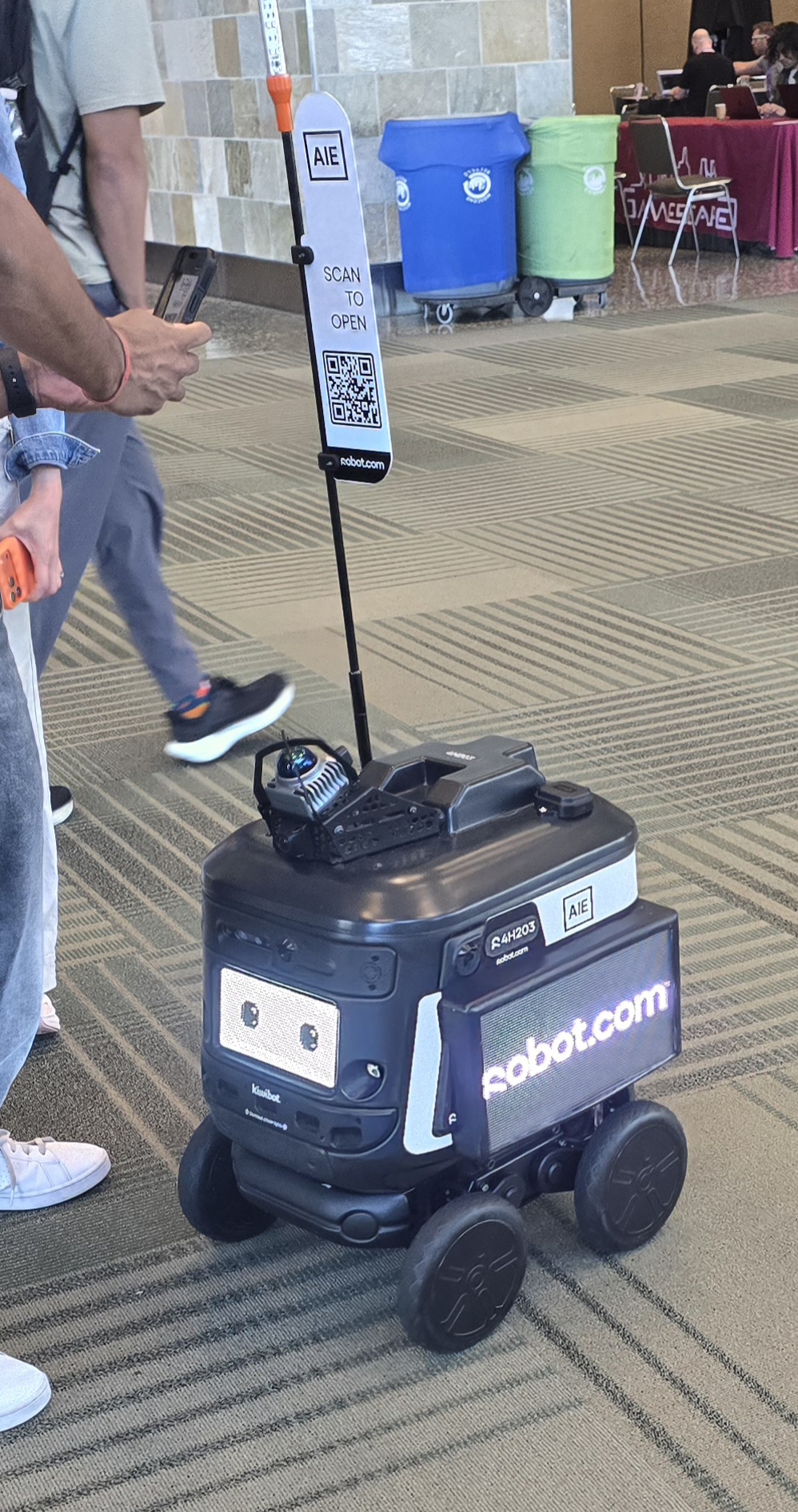
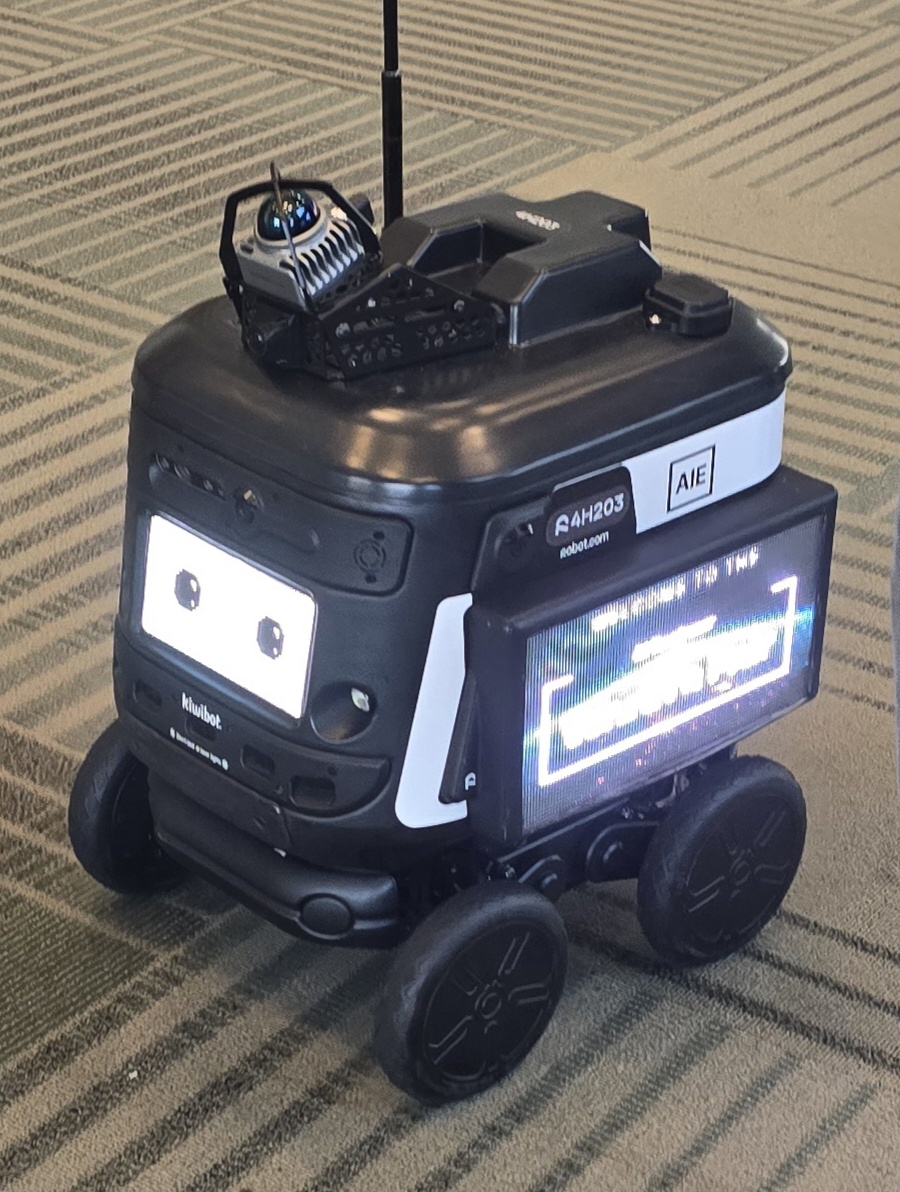
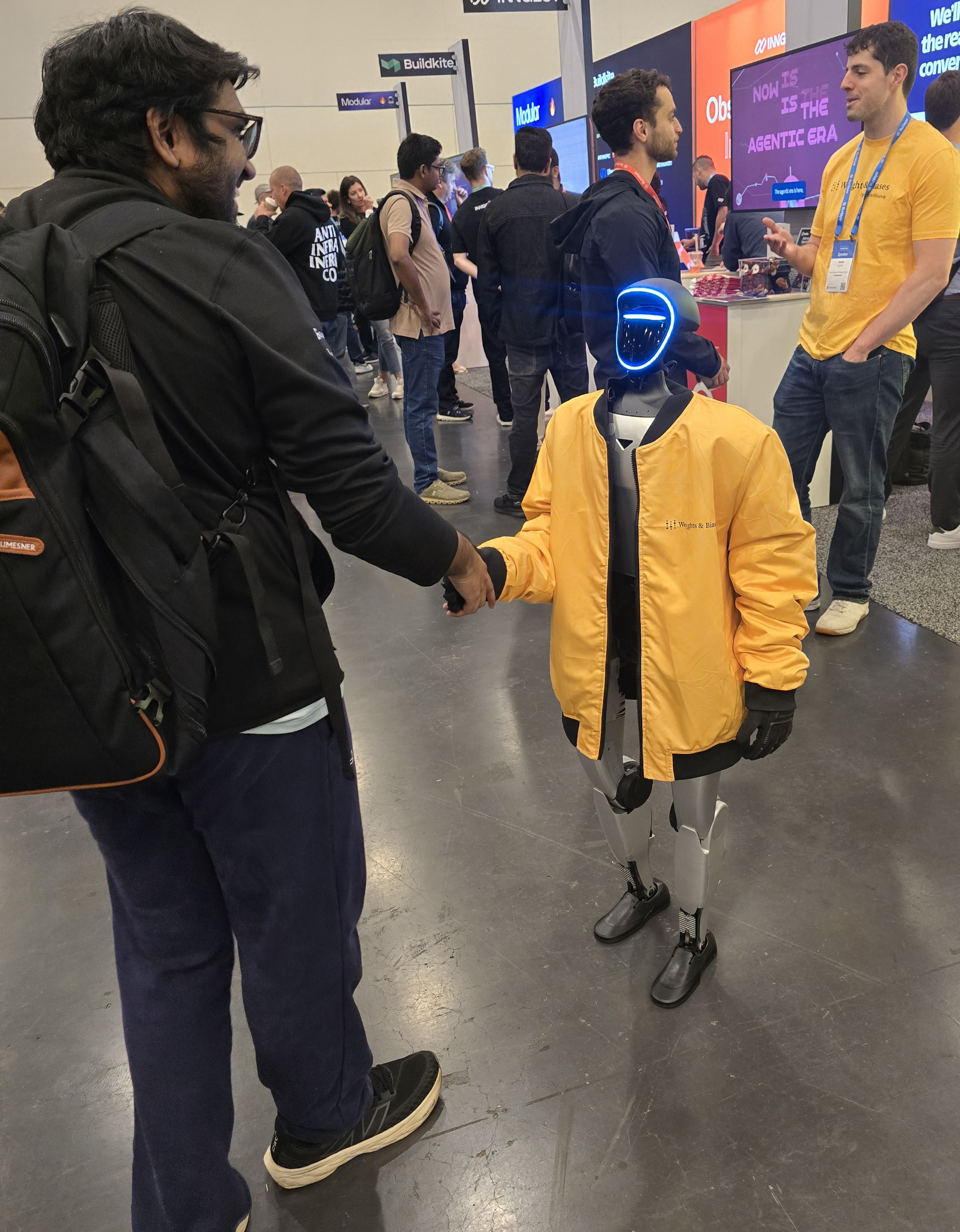
The Expo floor had fun swag, but I noticed that much of what was selling was still hype. Companies often didn't have ANY hint of what they did. It's a lot of "vibes". There were fun robots running around with swag and candy inside (we'll get to more of that on the Day 3/4 post), and the Expo portion felt full, but the rest of the venue was just... too big. It wasn't easy to just strike up a conversation with people, aside from the limited lunch area tables. Oh, and the Internet didn't work. I'm in the heart of downtown San Francisco, Silicon Valley (sort of) at the largest convention center... and I can't connect to do the workshops. How is this not a solved problem?
4:30 PM: Meeting up with co-workers K-Dawg and AI-Dawg.
6:00 PM: Amber India.
Anyhow, K-Dawg, AI-Dawg, and I shared some Amber India for dinner.
8:00 PM: Back to the hotel.
Then I went back to the hotel. Day 1 complete.
9:00 AM: "The Highest Loop" (swyx, Latent Space), Main Stage. swyx's usual thesis, restated for the third birthday of the AI Engineer post: the tightest human-AI feedback loop wins, not the biggest model. It's been the through-line of this whole conference since he coined the term.
9:05 AM: "On AI and Knowledge" (Pablo Castro, Microsoft). Castro's pitch: enterprise AI is bottlenecked by unstructured organizational knowledge, not model capability. Standard Microsoft framing, tied loosely to their own Copilot and Graph ecosystem.
9:25 AM: "The Golden Age of AI Engineering" (Alexander Embiricos, Romain Huet, OpenAI). Thin on specifics, mostly a victory lap for how far the tooling has come since GPT-3. Andrej Karpathy was along for this one.
9:45 AM: "GLM-5.2: Frontier Intelligence, Open Weights" (Zixuan Li, Z.ai). The pitch: frontier-grade intelligence, fully open weights, no API lock-in required. Presented remotely, because he could not get into the country.
10:05 AM: Thom Wolf (Hugging Face, Co-founder and CSO) and Olive Song (MiniMax, RL Lead). I bailed here to beat the crowd to the Claude workshop.
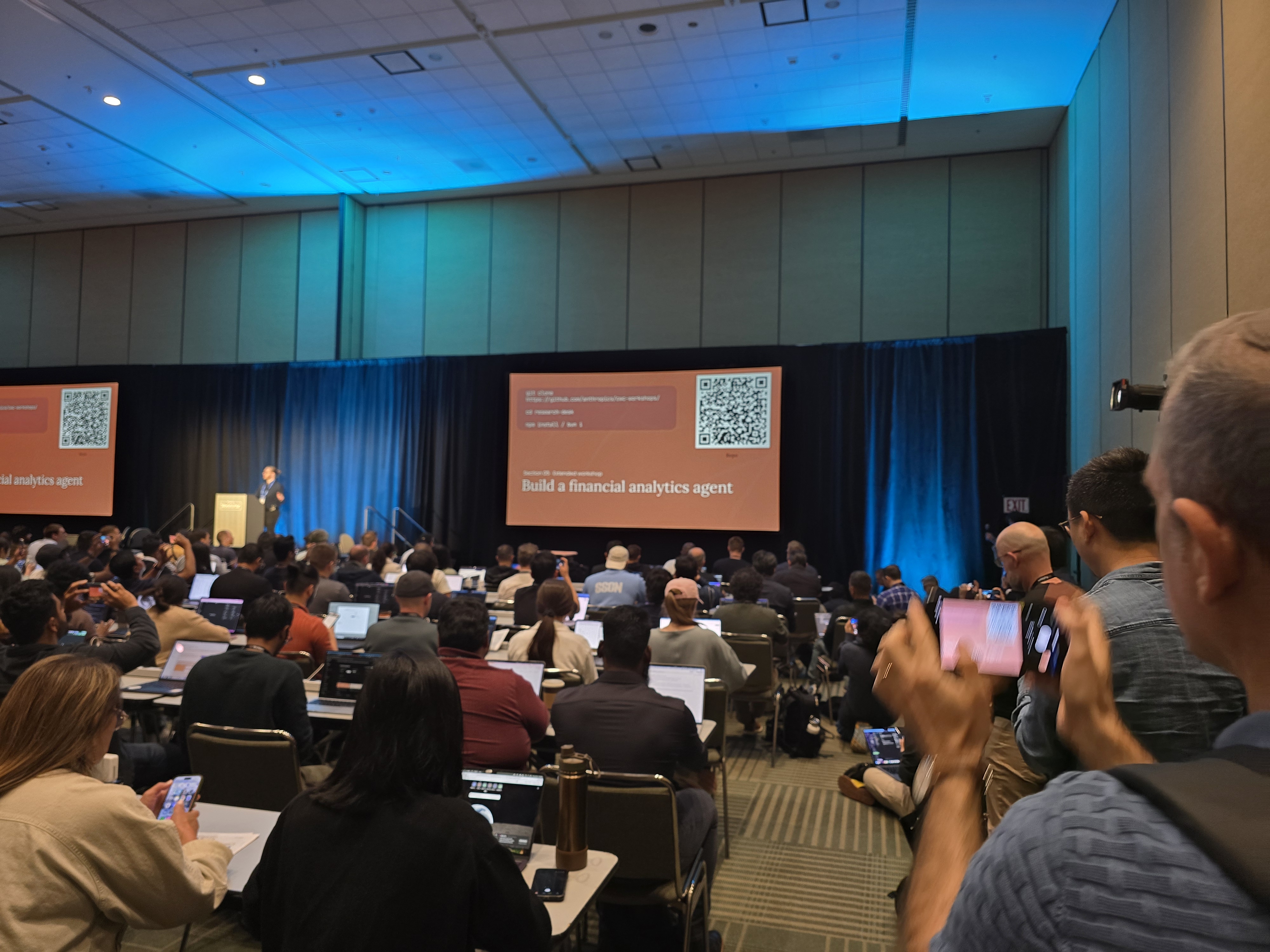
10:05 AM: Claude Managed Agents Workshop (Anthropic, Priyanka Phatak and Gabriel Cemaj). The room was packed well past comfortable. The workshop builds a financial analytics agent through Claude Console's wizard interface: define the agent, wire up the interface, done. It is impressively easy, and it is also the opposite of the AWS approach: you are using their tools and their UI, not code you own. If your agents cannot live on Anthropic-hosted infrastructure, this path is not for you. Workshop repo: cwc-workshops, research-desk directory. The deeper Anthropic material from this day (long-horizon tasks, Dreaming, securing source code) gets full treatment in the Fable Hype post.
12:00 PM: Chipotle! A Colorado taste of home!
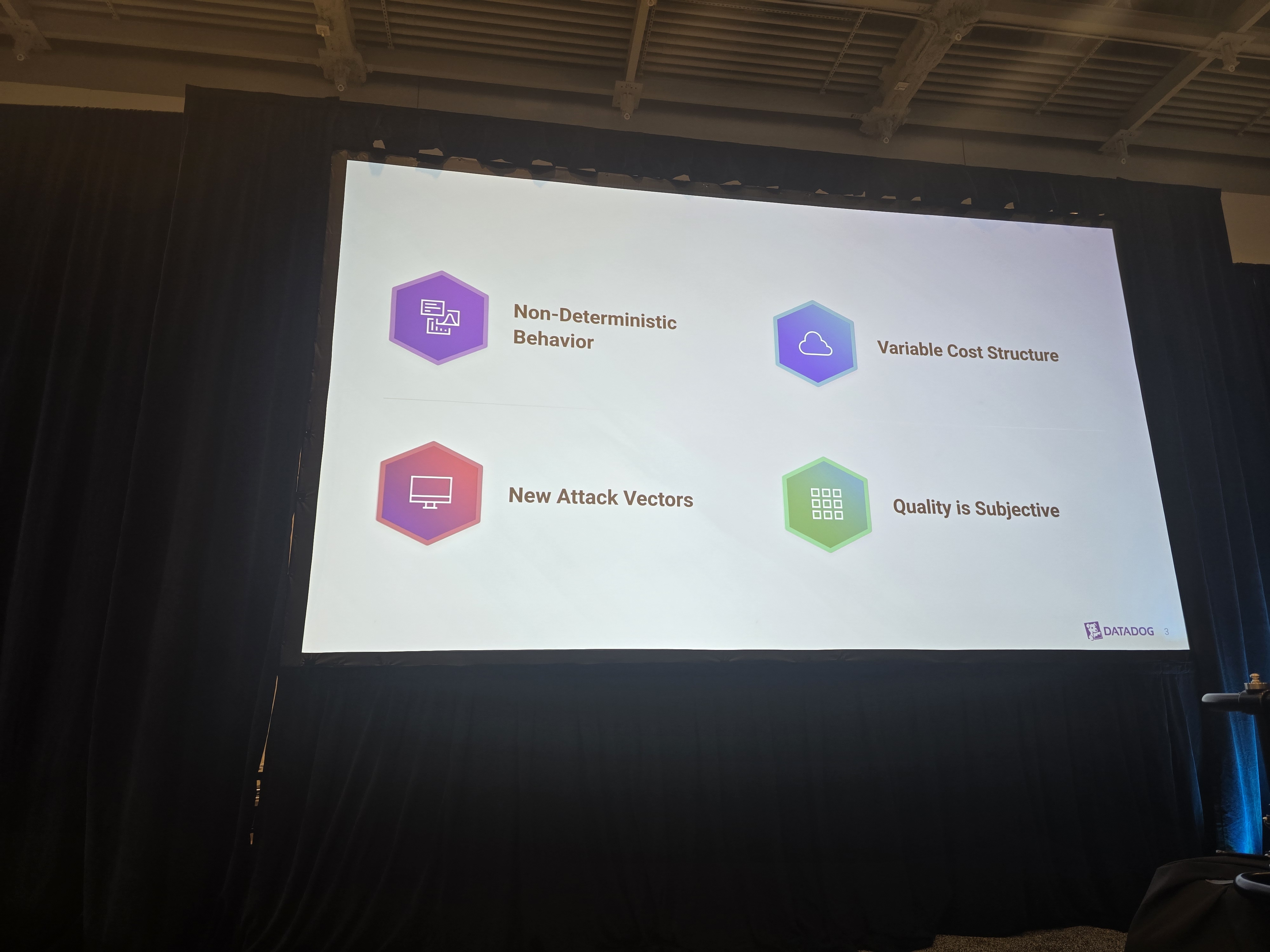
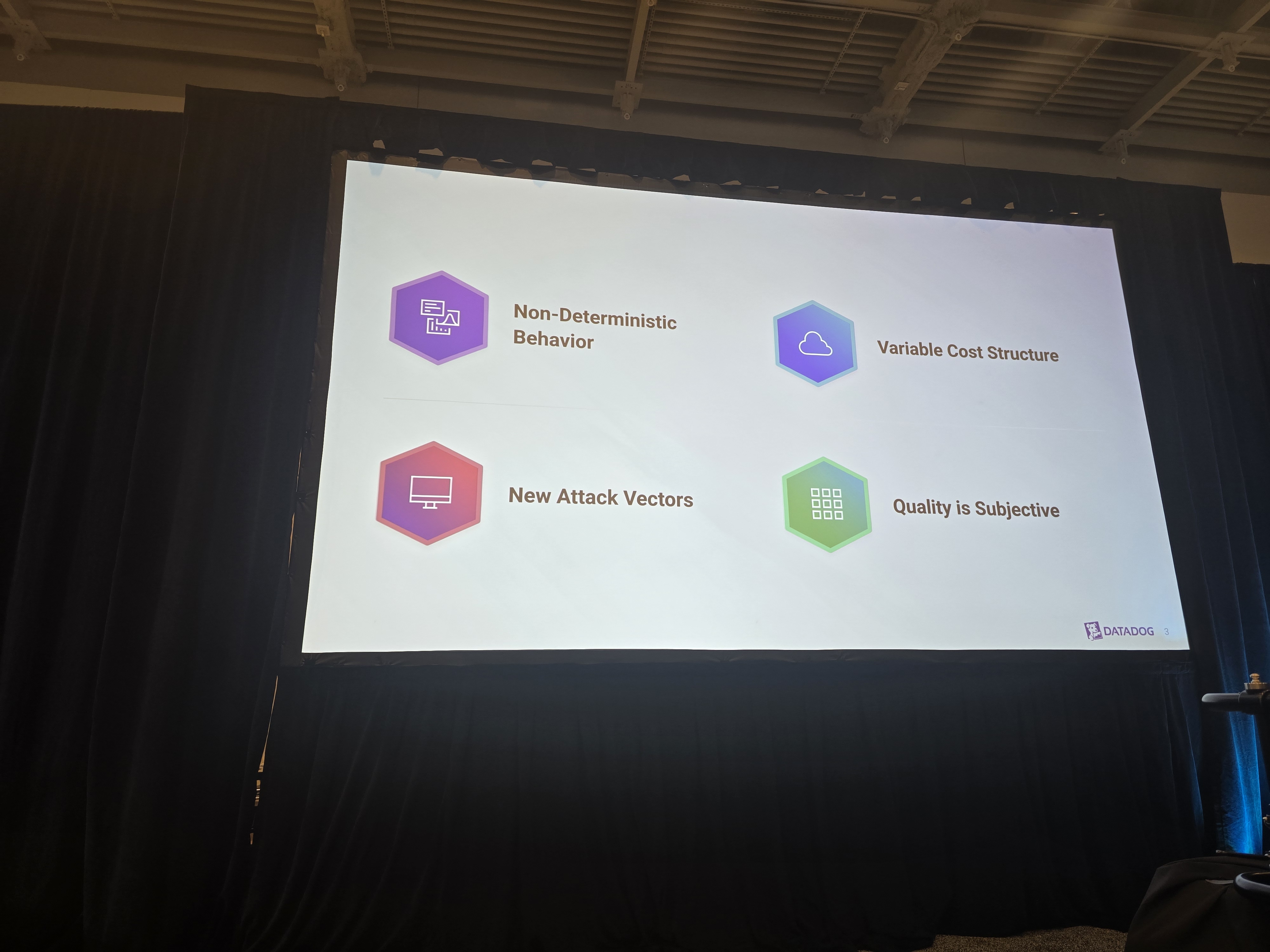
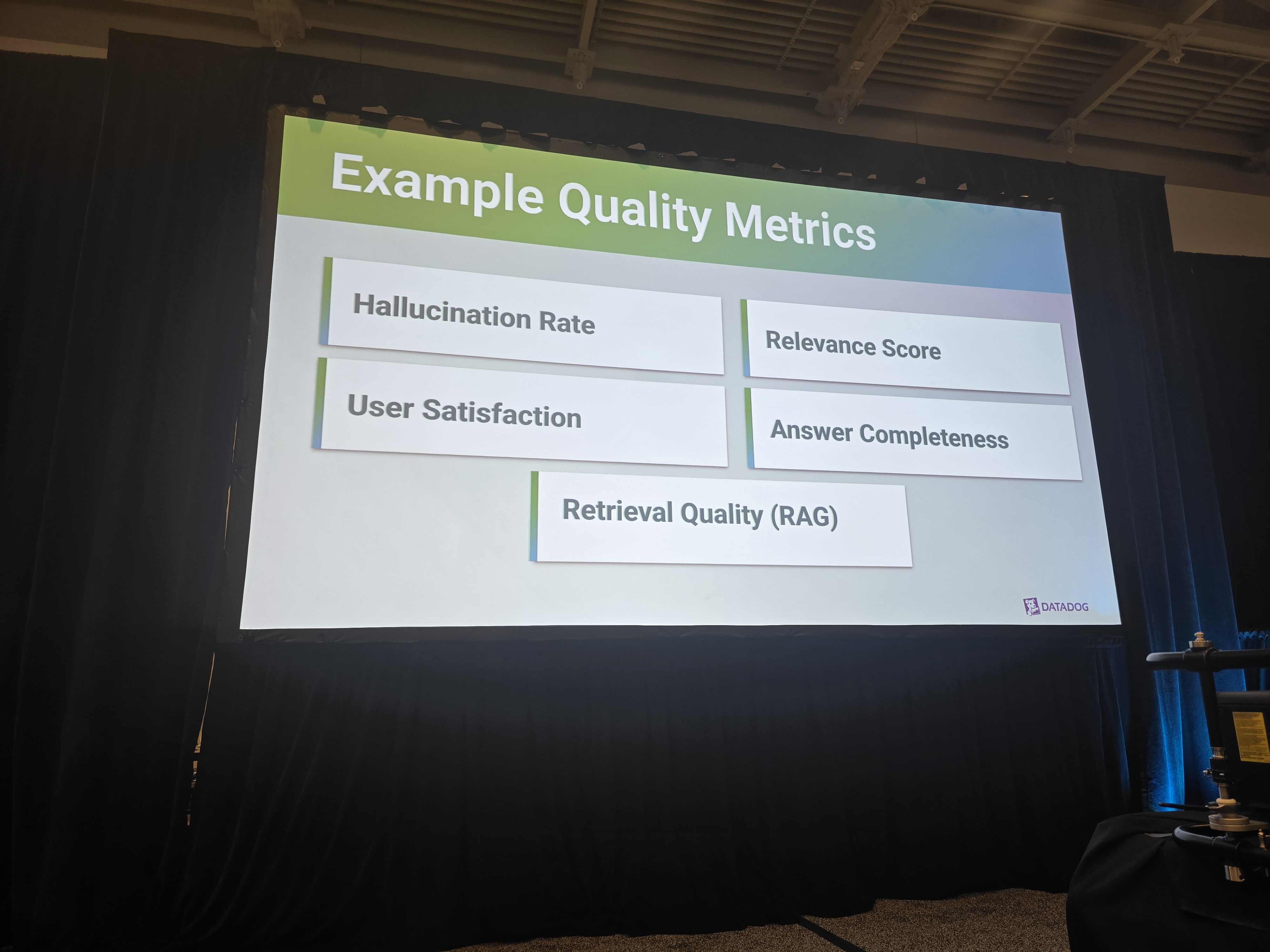
2:50 PM: "Beyond Golden Signals: Monitoring in the Age of GenAI" (Marina Petzel, Datadog). The most immediately useful session of the first two days. Four things make GenAI monitoring different from classic observability: non-deterministic behavior, variable cost structure, new attack vectors, and subjective quality.
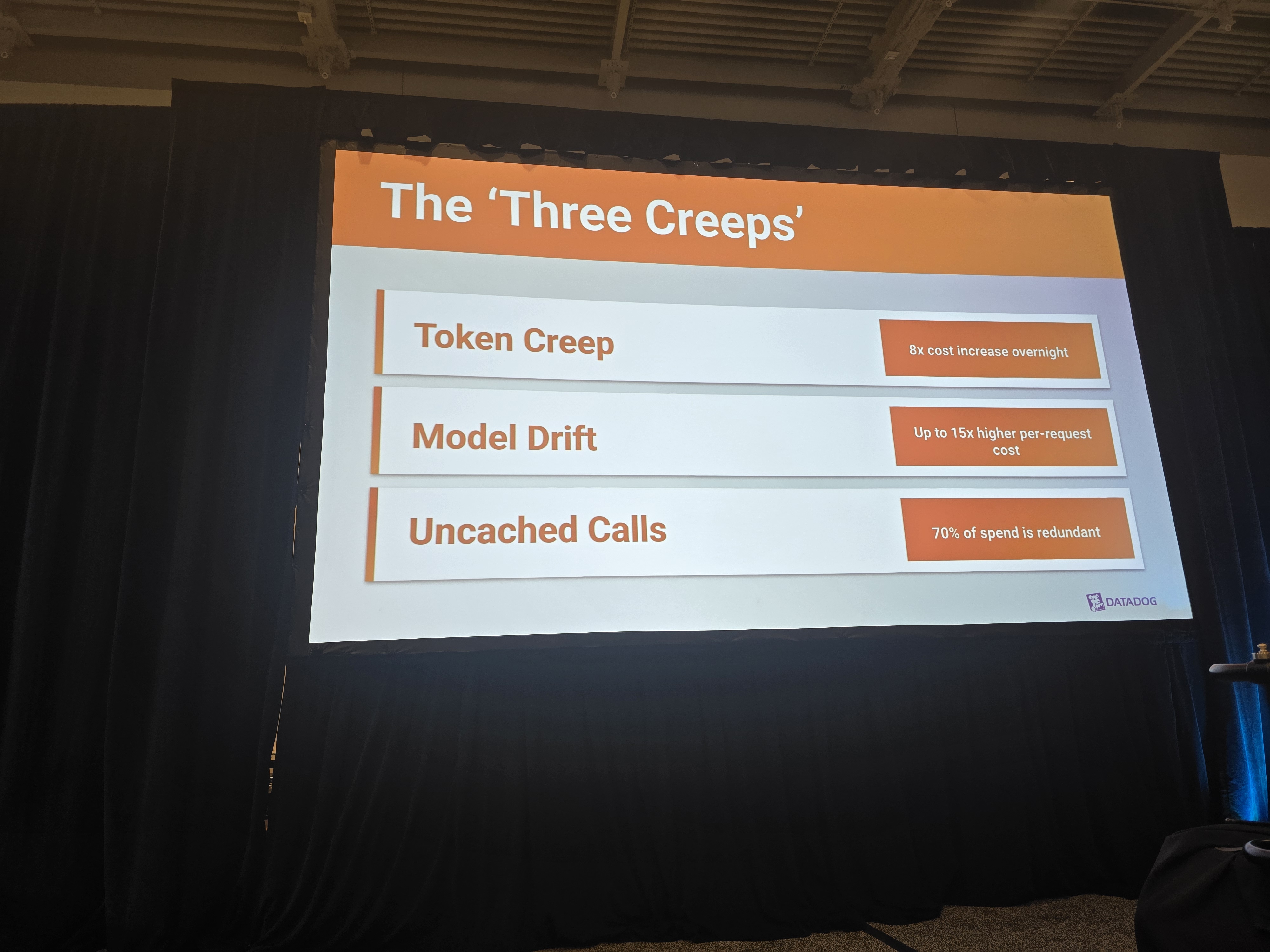
The cost failure modes are the part to tape to your monitor. Petzel calls them the Three Creeps:
- Token Creep - an 8x cost increase overnight from prompts and context quietly growing
- Model Drift - up to 15x higher per-request cost when routing silently shifts to a pricier model
- Uncached Calls - 70% of spend redundant because nobody checked the cache hit rate
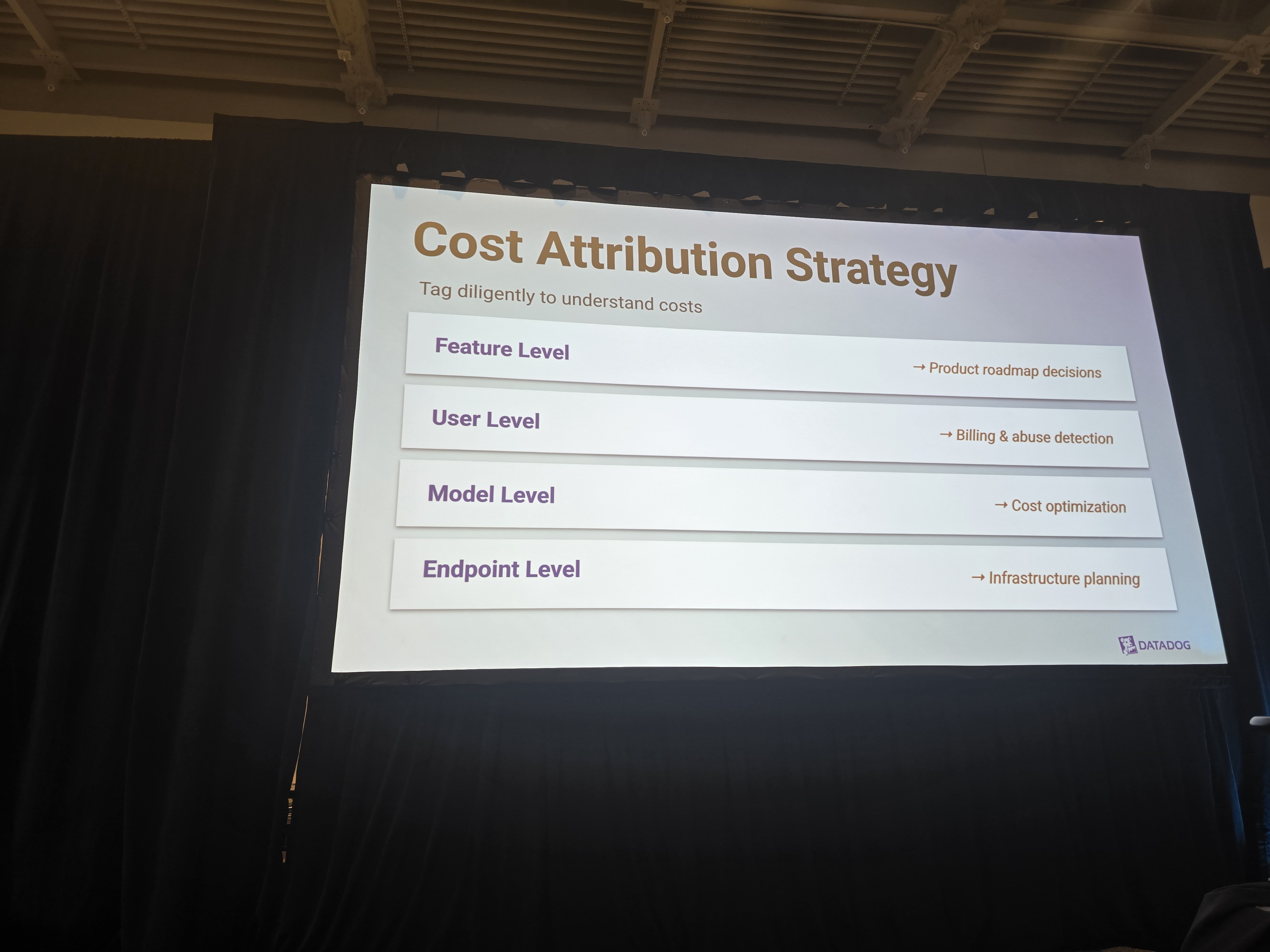
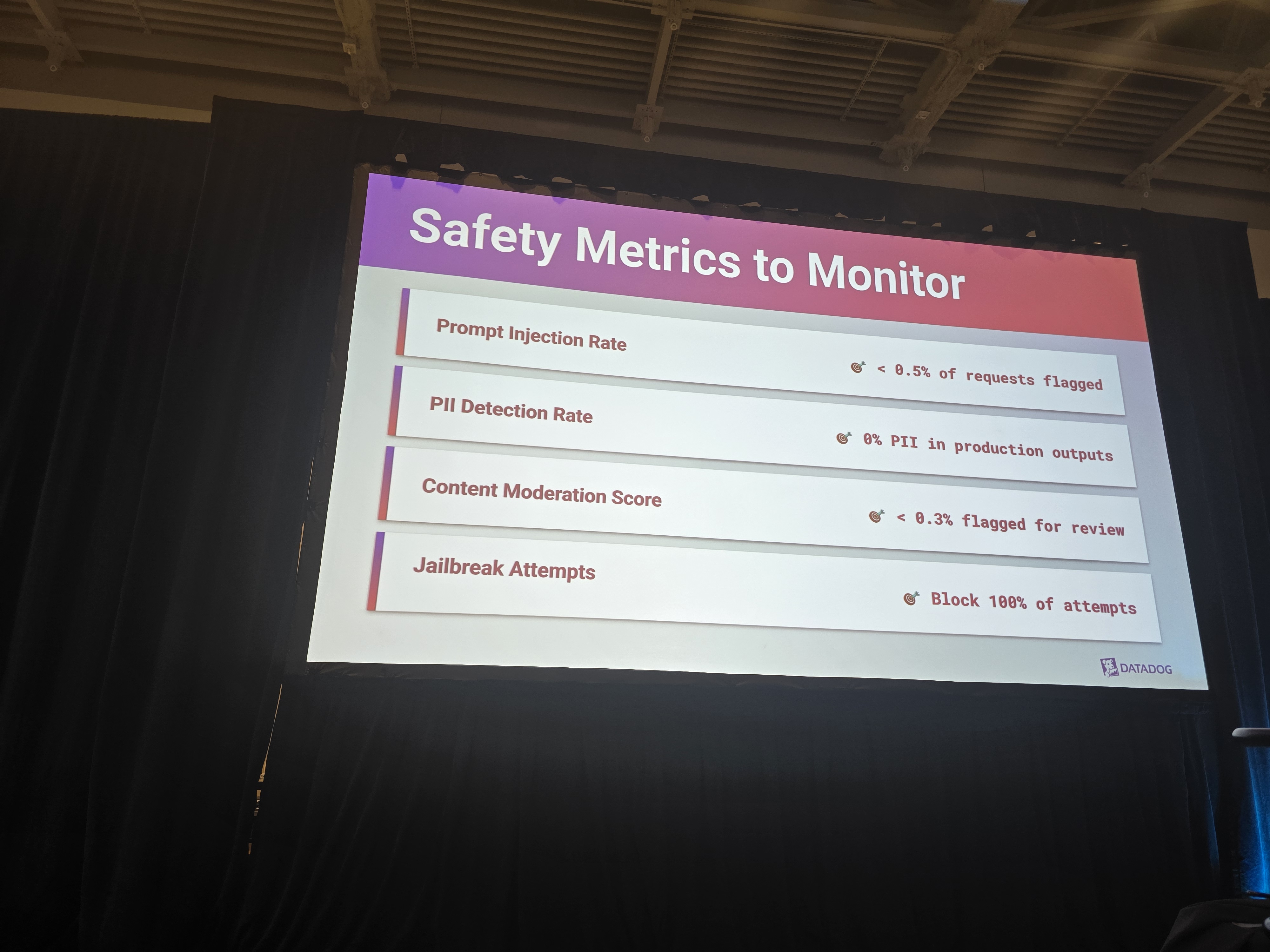
The prescription is unglamorous, but something I preach all the time: tag diligently. Attribute cost at four levels - feature (roadmap decisions), user (billing and abuse detection), model (optimization), endpoint (capacity planning). And monitor safety against actual thresholds: prompt injection flagged on under 0.5% of requests, zero PII in production outputs, under 0.3% of content flagged for review, 100% of jailbreak attempts blocked.
"Claude for Long-Horizon Tasks" and "Using LLMs to Secure Source Code" also ran on Day 2; both land in the Fable Hype deep dive.
4:00 PM: Expo!
I knew the Claude workshop would be packed. It's Anthropic, people want to see what's coming next. Right now Claude is king. It might not stay that way, but it is right now. The whole thing was basically an hour long demo of their infrastructure, four twenty minute sessions we didn't need all of. More annoying than the content was that the internet still didn't work and I ended up sitting on the floor. I'm too old to sit on the floor.
The wizard approach is something to be suspicious of, for the same reasons as the Atlassian stuff. The difference here is that you're now doing infrastructure with a new company, instead of a de-facto industry standard. This is risk. Also, because of GDPR, data sovereignty laws, and other regulations, my current employer isn't going to run our stuff on Anthropic's infrastructure, or any other Expo hype company's, for that matter. It needs to be on ours. It's Heroku all over again. Not interested. It might work fine for small orgs, small apps, POCs or MVPs, but anything with real substance, you need to know what's happening under the covers, and you need to be able to bolt on your own infrastructure when their platform doesn't have what you need. That's the vendor lock in that actually sucks.
On GLM-5.2. Someone on Reddit last week said it better than I can:
I've said it before and I will say it again. Those who embrace open source will win this race. This kind of technology is best democratized. Also think of it this way. If released open source, yes, the floodgates are completely chopped down. At the same time, a government can't just decide a model must be restricted for competitive reasons.
Source: u/Smith6612, r/technology
China's going to catch up fast even running worse chips right now. Open source always wins this kind of fight eventually. I need to actually dig into GLM and what open weights means here, but the instinct is right. I think AI will, too.
The Datadog talk wasn't the flashiest session, but it's the one whose ideas I actually kept thinking about afterward. Petzel seemed nervous, and putting four stages on the expo floor at once was a bad call, way too loud to focus. But the Three Creeps are worth remembering. I don't know if we're ready for this in SRE land at my current employer yet, at least not my corner of it. Tag diligently though? Obviously. I preach that constantly. Standardize your names, your tags, or you will absolutely lose track of everything.
I went back to the hotel frustrated with the wifi still. I had a spicy sandwich from The Melt (a local San Francisco chain), the Spicy Mission Melt, for dinner with actual fresh jalapenos which was decent.
I also read through some of the daily newspapers from the conference. Yes, they had some of that old timey print, with pointed articles about technology.
Day 2, in the books. Two more to go, and I still hadn't found a signal worth trusting.