Raising Hackers: pixie_technologist and the Circuits & Sensors Lab
What are you reading this on? Your phone? Computer? Inside of that small device is a series of complex soldered bread computer chips, wires, buttons, and more. Do you know how to make a computer? Most likely, your answer is no.1 But, I do. This summer, I went to a camp that taught me how to make a game-boy, a device similar to what you're reading this on right now. Using the same techniques used to make the modern phone and computer we all know and love, I made an electronic that's commonly known. Let's dive in.
Day 1: the potentiometer
A potentiometer is used to change the flow in the circuit (I think).2 Mine changed how fast an LED flickered. Before camp, I used a potentiometer to change the color of an LED, and turn an LED on and off. I didn't notice anything right away, but the LED slowly flashed faster until I turned it the other way.
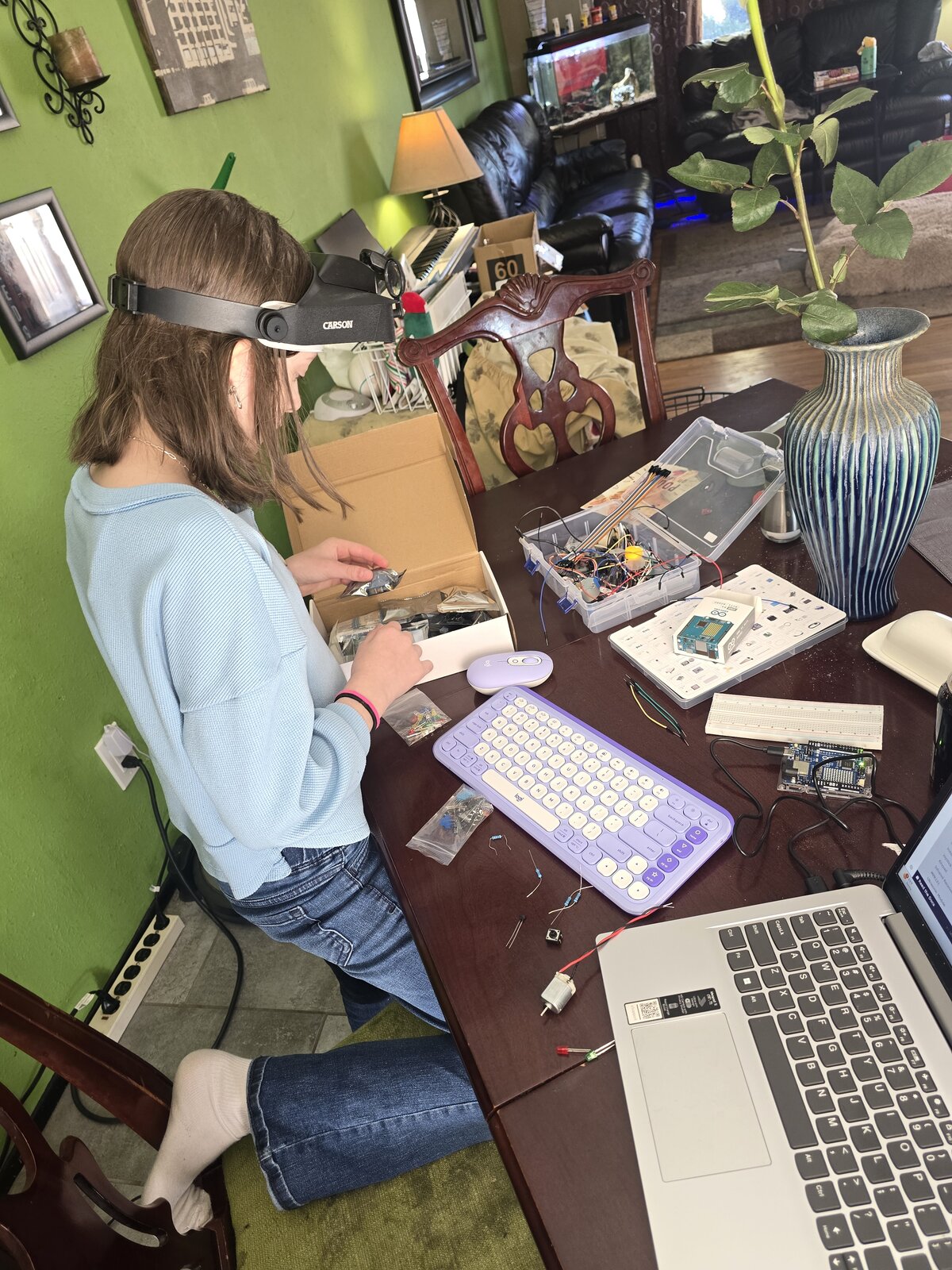
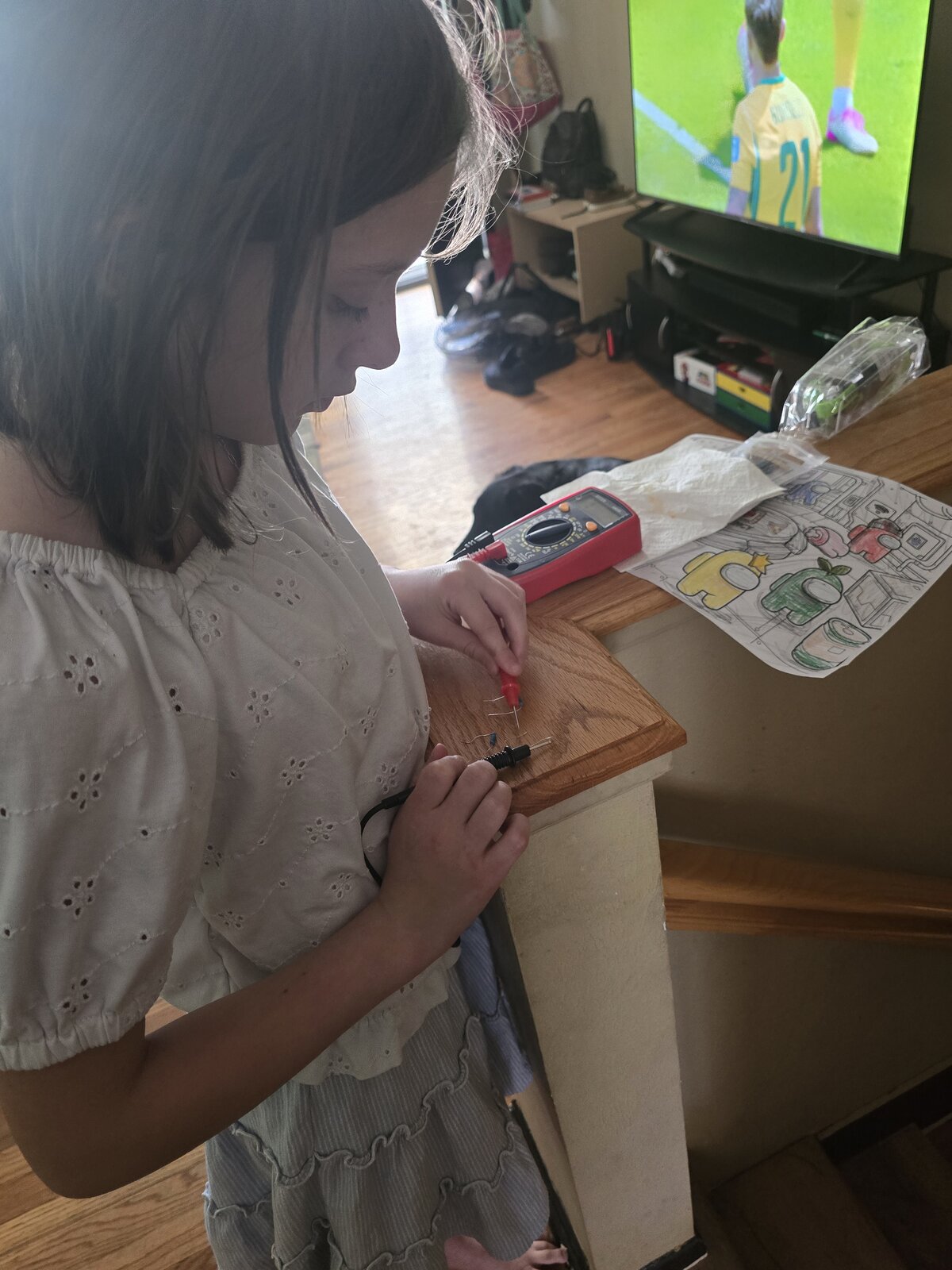
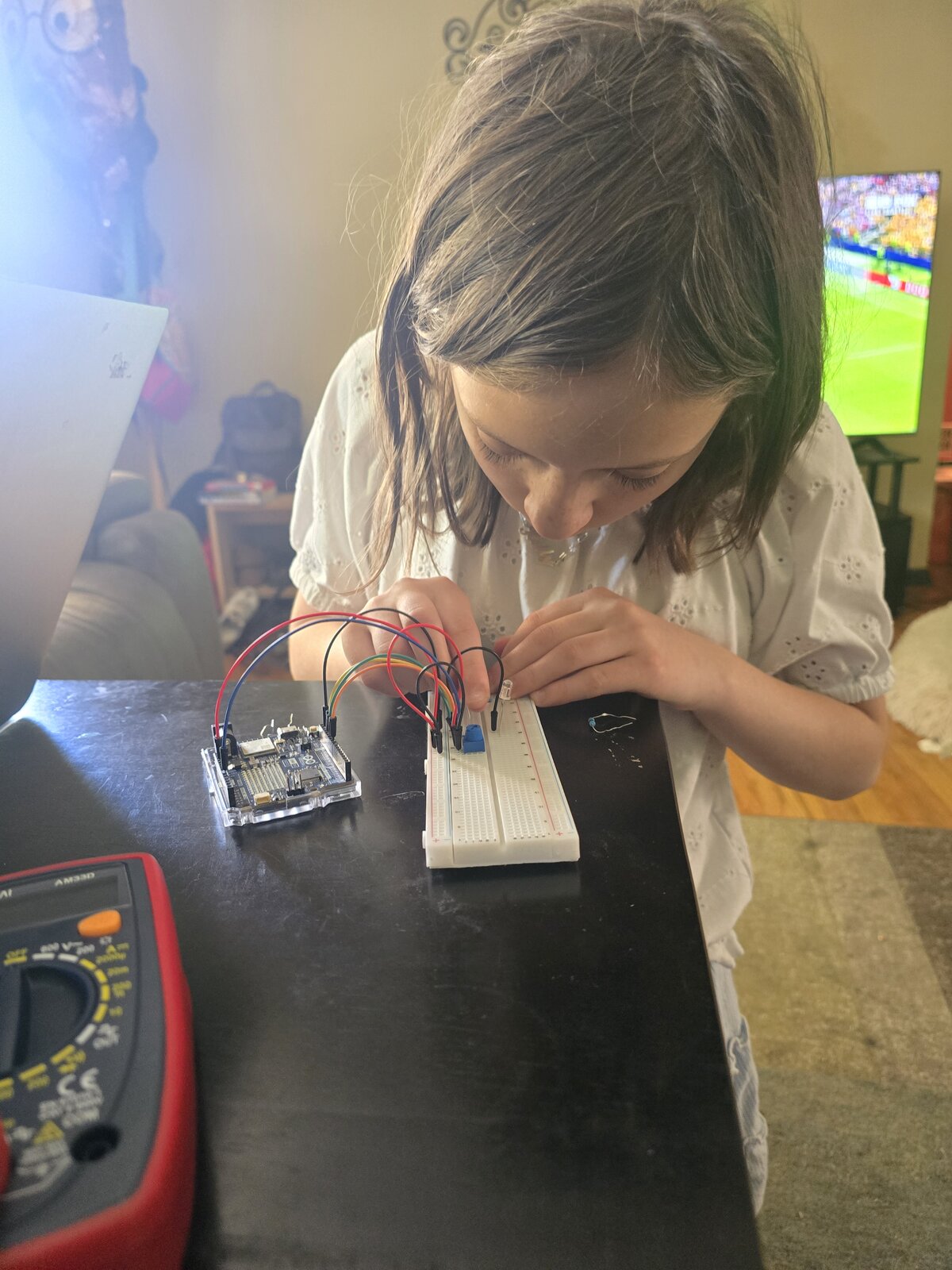
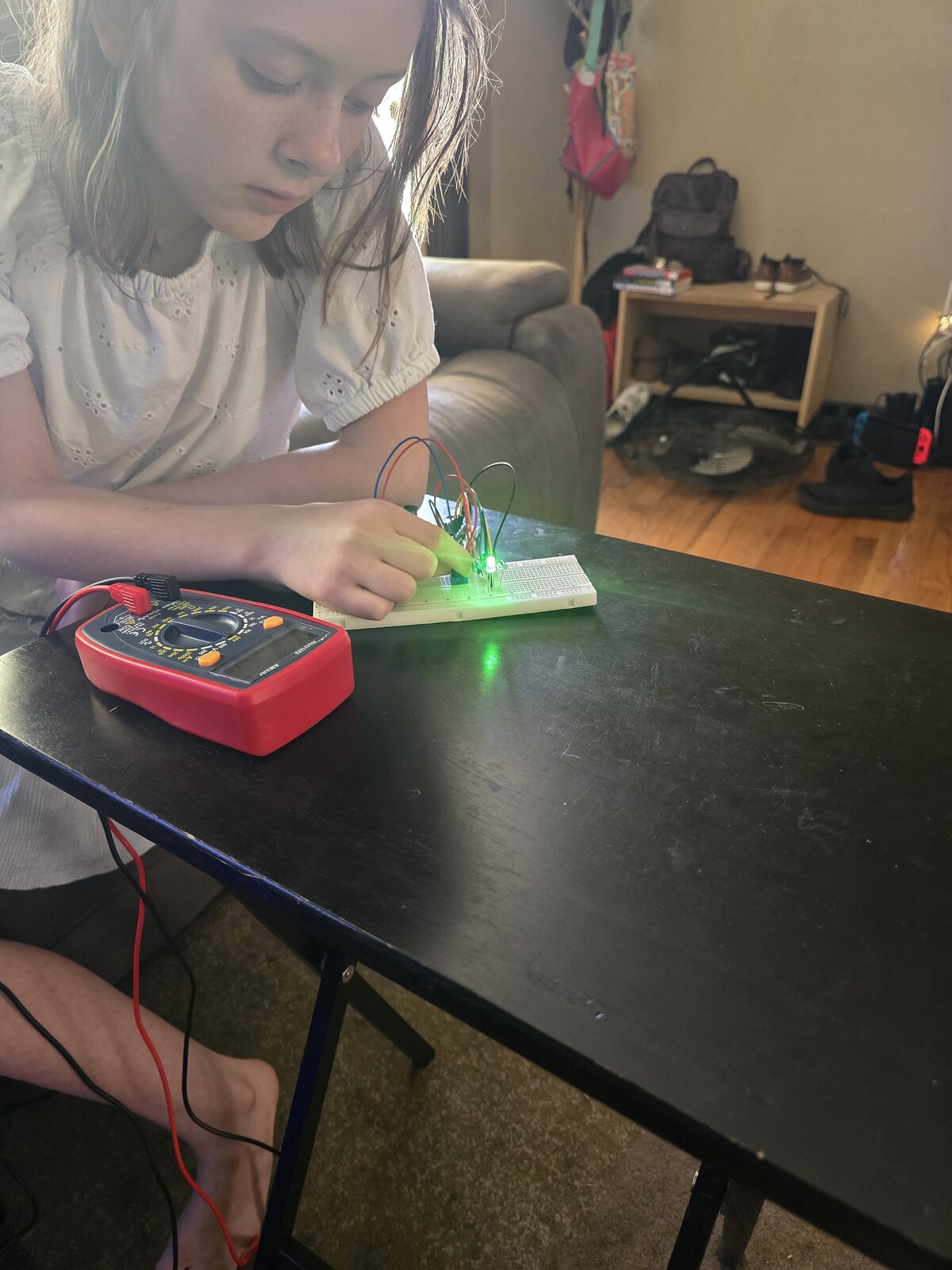
A simple on/off switch circuit, powering the fan.
A different circuit, this one with a potentiometer - turning it changes the LED's color.
Days 2-3: the Simon game
The Simon game is a game where you're supposed to click colored buttons in the order the matching LED lights up. The main parts needed are the LEDs, buttons, resistors, wires, and passive buzzer. The LEDs are used to light up, forming a pattern. Then, the buttons will be pressed in the order the LEDs light up in. The resistors turn down the energy flow so the LED bulbs don't pop, the buzzer makes sound (duh), and the wires carry the electricity. The code was complicated, but interesting. However, this code didn't work. In the end, we found code that worked and copied and pasted it into Java.3
Days 4-5: soldering
When I entered camp today, I was expecting a soldering iron to be like a hot-glue-gun. I was somewhat correct, it being like a pen. My iron was blue, and pen shaped. The tip was hot (over 400 degrees celsius). This was my first time using a soldering iron as well. When soldering, you were supposed to hold it like a pen up to the hole and wire, and melt solder next to it, melting inside. It was rather easy and fun. However, if I were to accidentally touch the tip, it'd be a 3rd degree burn. It was a little scary.
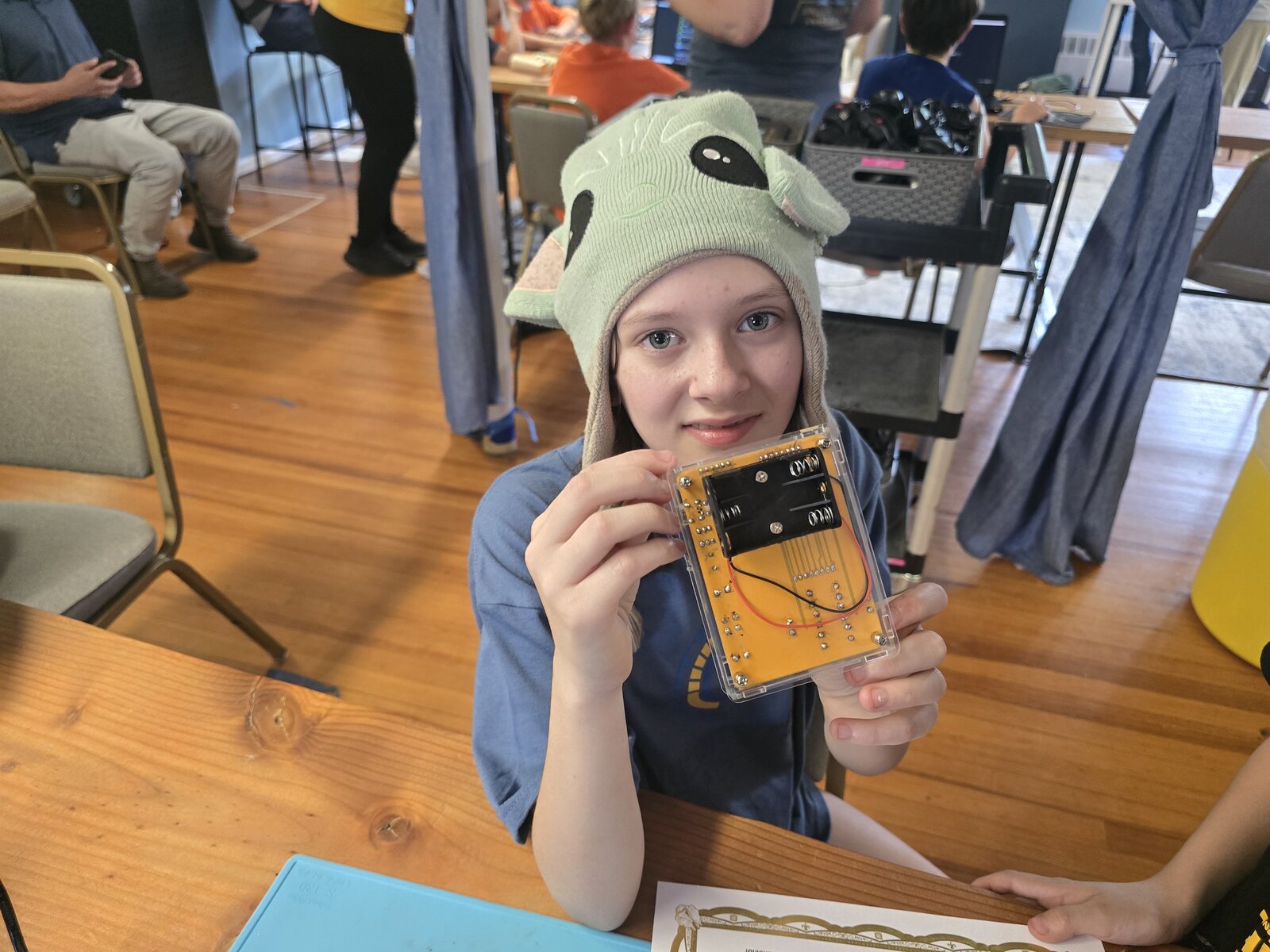
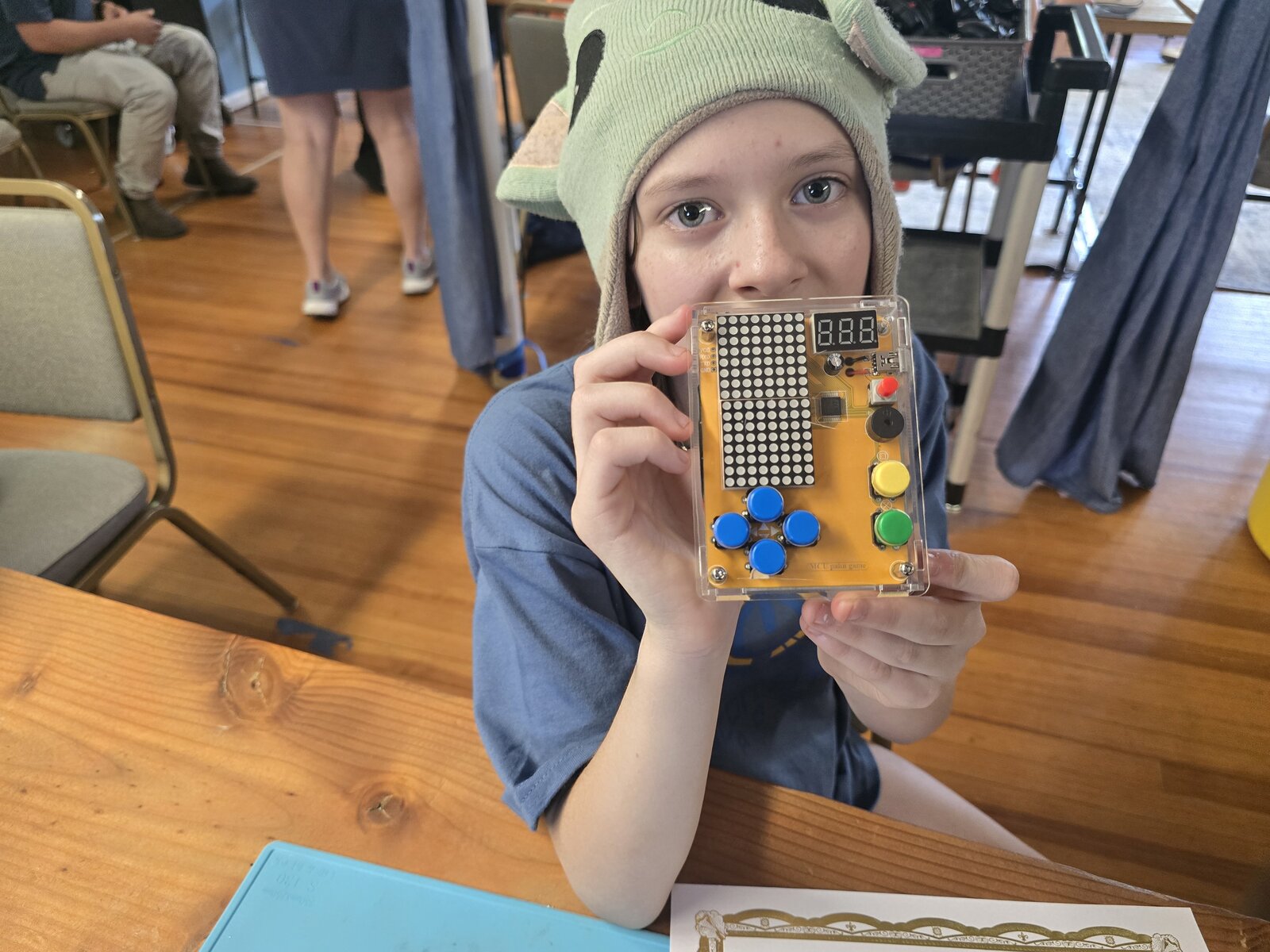
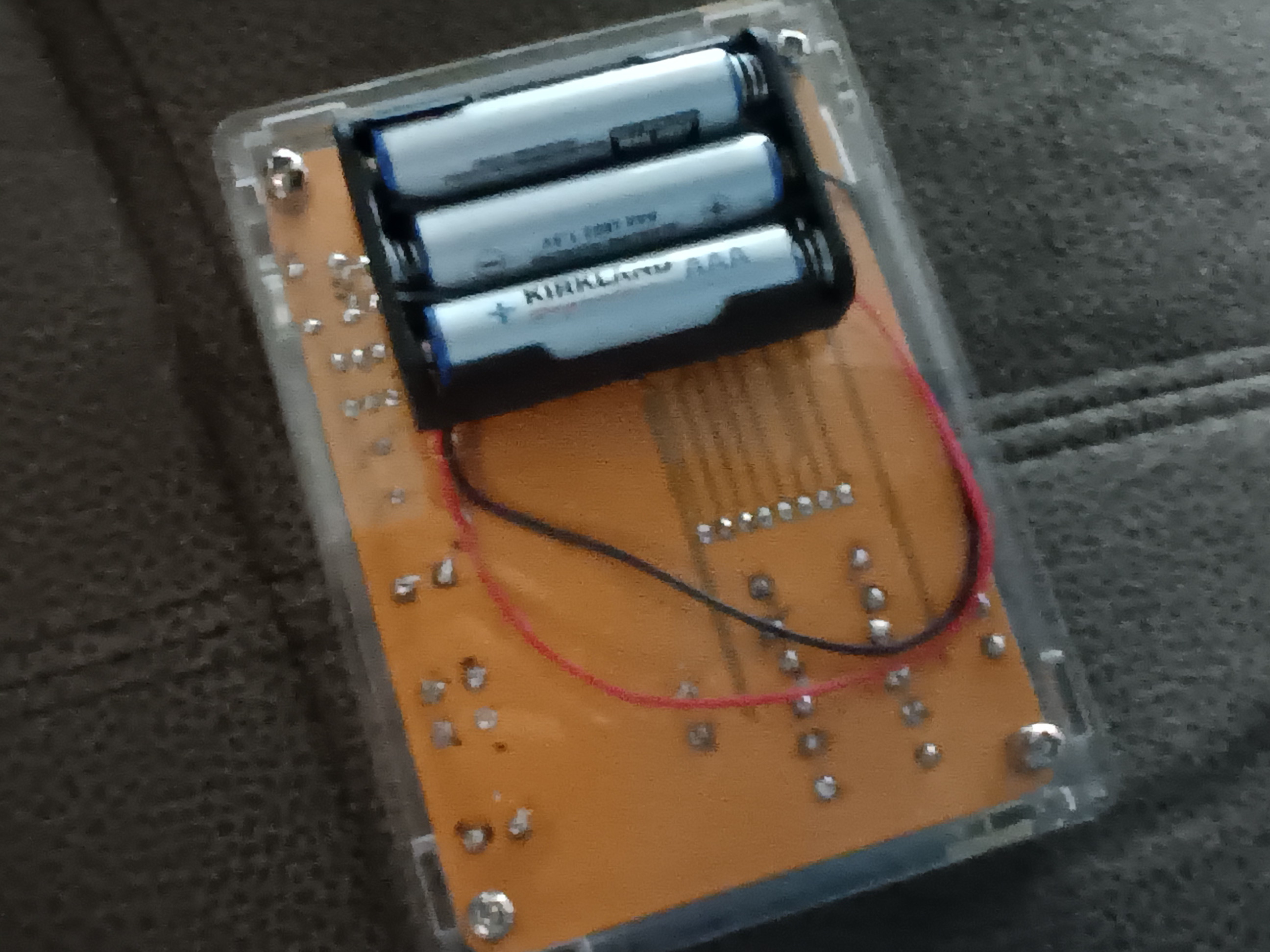
The first thing we did was solder two wire tips together, then solder-suck them apart with a solder sucker. After this, we built a game-boy-like item. It had seven buttons (up, down, left, right, back/pause, okay/confirm, and on/off), a passive buzzer (for sound and music), two displays (for the games), an item for signal, a cable space, and a battery holder.
After a while, I burnt my pinky! It SUCKED. It hurt for a while, but it stopped after a bit. I was much more careful after that. Then, I soldered a display in upside down! It was annoying to get out, but we did eventually, with the help of an adult. After that, it was done!


the takeaway
When I went to this camp, I didn't realize how hard soldering is, and how much fun it is as well. Creating an actual real-world item by hand was not only educational and helpful, but fun and enjoyable. I made games, code, and much more at one simple camp.
the games
Tetris: A puzzle game where you earn points by fitting blocks in different orders, clearing rows. The game goes on until you lose; there's no real "winning" the game. You lose if you run out of space and the blocks go above the top.
Snake: A puzzle game where you collect dots, growing your snake. Like Tetris, there's no end to the game. You keep playing until you lose or choose to be done. You lose by bumping into an edge, or yourself.
Race: A racing game where you go left and right dodging people in the road. Like Snake and Tetris, this game continues until you lose. In this case, you bump into a person.
Space Invaders: A game where you shoot at dots slowly falling to the bottom of the screen, earning points for each dot. Like the other games, you can't beat it, and you play 'till you lose - when the dots touch you or the bottom of the screen.
Random Number Generator: What it sounds like.
1. Well, maybe that's incorrect for this blog. Fair assumption for most readers. Considerably less fair for the crowd that hangs out on a site called conspicuoustechnologist.com. ↩︎
2. Close enough. A potentiometer is a variable resistor. Turning the knob changes its resistance, and by Ohm's law that changes how much current flows through that part of the circuit (or how voltage gets divided across it, if it's wired as a divider - the common setup for something like an LED brightness or blink-speed control). "Changes the flow" isn't wrong, it's just skipping the word "resistance." ↩︎
3. Not Java. The Arduino IDE writes sketches in a C/C++ dialect (technically "Wiring," a simplified C++), compiled with avr-gcc, not Java. Easy mixup, they're both curly-brace languages. ↩︎